

30 October, 2026
As Queensland’s temperatures rise and families spend more time outdoors, so do paralysis ticks. Paralysis ticks (Ixodes holocyclus) are one of the most serious threats to dogs and cats in eastern Australia, and every year they leave thousands of pets requiring urgent veterinary care.
A single tick can make a dog or cat critically ill within days, turning a routine walk, beach visit or afternoon in the backyard into a veterinary emergency.
What is a paralysis tick?
The paralysis ticks found in Queensland (Ixodes holocyclus) are small parasites that attach to animals and humans and feed on their blood in order to reproduce. While feeding, they can release a toxin that may cause life-threatening paralysis in dogs and cats.
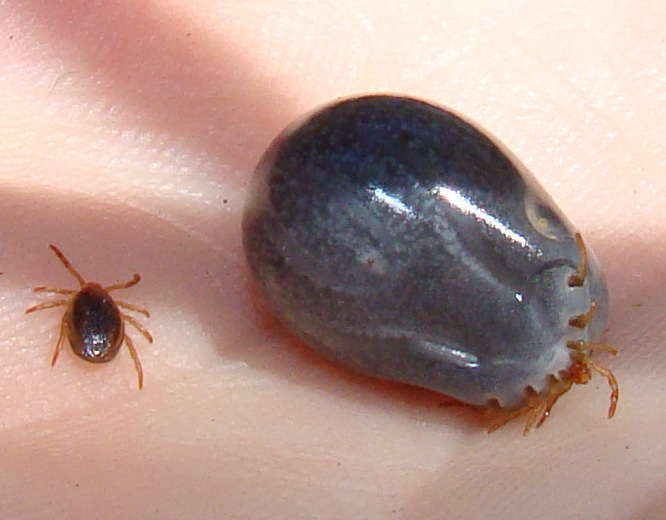
Paralysis ticks before and after feeding. Photo: Bjørn Christian Tørrissen, CC BY-SA 3.0, via Wikimedia Commons
Where do paralysis ticks live?
Paralysis ticks thrive in warm, humid environments and are commonly found in long grass, dense vegetation, bushland, gardens and coastal scrub. They wait on vegetation and latch onto passing animals, putting dogs and cats at risk during walks, outdoor adventures and even in their own backyards. Paralysis ticks are commonly found on small mammals, such as possums, and are often more prevalent in suburbia than people realise.
While the warm, humid months that Queenslanders know and love are peak paralysis tick season, our emergency team treats tick paralysis all year round.
Here’s how to protect your pet, and what to do if you find a tick.
How tick paralysis affects your pet
While it feeds, a paralysis tick releases a toxin that disrupts the signals between nerves and muscles. Ticks are normally attached for 3–4 days before signs start to develop. Once signs start, they can get worse quickly, so it helps to know what to look for.
Watch for:
- Weakness or wobbliness, often starting in the back legs
- A change in your pet's bark or meow
- Retching, gagging, drooling or vomiting
- Difficulty swallowing
- Noisy, laboured or unusual breathing
- Restlessness, or being unusually quiet
- Facial paralysis or an inability to blink the eye, which may present as a sore or red eye
Cats and indoor pets can be affected too.
Found a tick? Act fast
- Remove it straight away, gripping close to the skin and pulling away from your pet’s body.
- Keep your pet calm, cool and still.
- Don’t offer food or water if your pet is weak, gagging, retching or struggling to swallow.
- If you notice any signs, come straight to your nearest emergency vet.
Often there is more than one tick, so keep checking for more, but don’t delay getting emergency treatment to do it.

Prevention
Year-round prevention is the most effective way to protect your pet from paralysis ticks. Choose a veterinarian-recommended paralysis tick preventative appropriate for your pet and administer every dose on schedule. Even pets that spend most of their time indoors can be exposed to ticks, so consistent protection is essential. While preventative products greatly reduce the risk, combining them with regular tick searches provides the best defence against this potentially life-threatening condition.
- Never use a dog tick product on your cat unless your vet confirms it’s safe.
- Do a daily fingertip search, even when prevention is up to date. No product stops every tick.
- Check the head, lips, ears, neck, between the toes, under the collar, the armpits, the groin and under the tail, especially after walking in bushland or coastal areas.
Want to know more?
Read our full guide to tick paralysis to learn about diagnosis, treatment and recovery.

We're here 24/7
Pet Emergency is open 24 hours a day, 7 days a week at Stafford, North Lakes and the Sunshine Coast. You don’t need an appointment or a referral.
Worried about your pet right now? Call 1300 753 838 or find your nearest Pet Emergency hospital.
Clinically reviewed and approved by Dr Tess O’Keeffe